
Suandok Bioinformatics Unit
Computational genomics, population genetics, and omics research for understanding human biology and disease.
Connecting genomic data with biomedical questions
We bring bioinformatics expertise to biomedical research through omics analysis, computational workflows, and close collaboration with researchers and clinicians.
Based at CMUTEAM, Faculty of Medicine, Chiang Mai University, our work connects genetic variation, population diversity, and disease. We also support study planning, analysis design, and practical training.
Research themes
Northern Thai imputation server
We are developing a Northern Thai imputation server to support genotype-imputation research focused on Northern Thai populations. The project addresses a practical research question: how can computational resources better support the analysis of genetic variation in this population?
Genotype imputation uses observed genetic markers and a reference panel to estimate genotypes that were not directly measured. The server remains under development; it is presented here as an ongoing research project rather than an available service.
Head-and-neck cancer genetics
How does inherited genetic variation contribute to susceptibility across head-and-neck cancer subsites and populations? Apiwat Sangphukieo coauthored an international genome-wide association study addressing this question, published in Nature Communications in 2025.
The study reports 29 variants across cancer subsites. It illustrates research at the intersection of statistical genetics and cancer epidemiology, with contributions from a broad international collaboration.
DHARA: A Thai Type 2 Diabetes Multi-Omics Consortium
How do genetic variation and multi-omics profiles contribute to the development, progression, and clinical heterogeneity of type 2 diabetes in Thai populations? Our team is among the initiators of the DHARA Consortium—Diabetes Health Analytics and Multi-Omics Research Alliance in Thailand—which brings together researchers and healthcare institutions across Thailand to address this question.
The project integrates harmonized clinical, genomic, and multi-omics data to identify molecular signatures, risk profiles, and potential biomarkers associated with type 2 diabetes and its complications. Through collaborative analyses and the development of an aggregated-data dashboard, DHARA aims to advance precision risk prediction, disease prevention, and personalized diabetes care while maintaining appropriate data governance and participant privacy.
Genomic profiling of childhood B-ALL
We are studying genetic changes in children with B-cell acute lymphoblastic leukemia (B-ALL) in northern Thailand. Our goal is to understand how these changes relate to treatment response and disease recurrence.
Our research combines long-read whole-genome sequencing and whole-exome sequencing, with plans to incorporate RNA sequencing, to examine genetic variants, chromosomal rearrangements, and gene fusions. By comparing samples collected at diagnosis, remission, and relapse, we aim to understand how leukemia cell populations change over the course of the disease.
Through this work, we aim to build a genomic and transcriptomic resource for childhood B-ALL in Thailand and use the findings to develop a targeted testing panel. With further validation, this panel could support more precise molecular diagnosis and risk assessment for children with B-ALL.
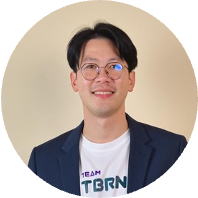
Apiwat Sangphukieo, Ph.D.
Apiwat brings expertise in omics analysis, computational pipeline development, and machine learning. His institutional profile describes interests in cancer research, human genetic variation, and cell-free DNA. His work connects computational methods with collaborative biomedical investigations.
Our team
Apiwat Sangphukieo, Ph.D.
Computational genomics, machine learning, cancer biology, and omics workflow development.

Patcharawadee Thongkumkoon, Ph.D.
NGS and variant analysis across cancer, rare diseases, pharmacogenomics, and microbiota.

Asst. Prof. Sivamoke Dissook, Ph.D.
Metabolomics, proteomics, microbiota, and metagenomics.

Pitiporn Noisagul, M.Sc.
Omics pipelines, machine learning, molecular modelling, and cancer research.

Lalita Lumkul, M.Sc.
Genetic epidemiology, polygenic risk, statistical analysis, and systematic reviews.

Vatusiri Kittiphongsathaporn, B.Sc.
Project coordination and day-to-day support for the SBU team.
Selected research output
Selected publications coauthored by members of our team, spanning genomics, cancer research, metabolomics, microbiome science, and clinical evidence synthesis. Article links provide the complete author lists and institutional affiliations.
HLA allele profiling and association in Thai patients with confirmed beta-lactam hypersensitivity: an NGS-based analysis
Lumkul, L., Kulalert, P., Sompornrattanaphan, M. et al. Frontiers in Pharmacology 17, 1782094 (2026).
SBU coauthors: Lalita Lumkul · Patcharawadee Thongkumkoon · Pitiporn Noisagul
Machine learning–based cfDNA fragmentation profiling using automated capillary electrophoresis for early detection of hepatocellular carcinoma
Udomruk, S., Sutthitthasakul, S., Bunsermvicha, N. et al. Communications Medicine 6, 166 (2026).
SBU coauthor: Pitiporn Noisagul
Cross-ancestral GWAS identifies 29 variants across head and neck cancer subsites.
Ebrahimi, E., Sangphukieo, A., Park, H. A. et al. Nature Communications 16, 8787 (2025).
SBU coauthor: Apiwat Sangphukieo
Insights into Microbial and Metabolite Profiles in Traditional Northern Thai Fermented Soybean (Tuanao) Fermentation Through Metagenomics and Metabolomics
Dissook, S., Thongkumkoon, P., Noisagul, P. et al. Foods 14(17), 3070 (2025).
SBU coauthors: Sivamoke Dissook · Patcharawadee Thongkumkoon · Pitiporn Noisagul
Establishment, characterization, and genetic profiling of patient-derived osteosarcoma cells from a patient with retinoblastoma
Thongkumkoon, P., Sangphukieo, A., Tongjai, S. et al. Scientific Reports 14, 11056 (2024).
SBU coauthors: Patcharawadee Thongkumkoon · Apiwat Sangphukieo · Pitiporn Noisagul · Sivamoke Dissook
Combinatorial Gene Expression Profiling of Serum HULC, HOTAIR, and UCA1 lncRNAs to Differentiate Hepatocellular Carcinoma from Liver Diseases: A Systematic Review and Meta-Analysis
Lumkul, L., Jantaree, P., Jaisamak, K. et al. International Journal of Molecular Sciences 25(2), 1258 (2024).
SBU coauthor: Lalita Lumkul
Gut Microbiota-Mediated Pharmacokinetic Drug–Drug Interactions between Mycophenolic Acid and Trimethoprim-Sulfamethoxazole in Humans
Dukaew, N., Thongkumkoon, P., Sirikaew, N. et al. Pharmaceutics 15(6), 1734 (2023).
SBU coauthors: Patcharawadee Thongkumkoon · Sivamoke Dissook
Research support and training
Omics Data Analysis
Analysis of genomics, transcriptomics, and proteomics datasets, with methods selected to suit the research question and the structure of the available data.
Pipeline and Workflow Design
Design and adaptation of computational workflows for research datasets, connecting analysis steps into an organised process that researchers can understand and reuse.
Custom Bioinformatics Support
Consultation on study design, statistical analysis, and bioinformatics questions. Discussions help define the research objectives and identify an appropriate analysis approach.
Workshops and Training
Bioinformatics and omics training for researchers, staff, and students, offered in Thai and English to support practical understanding and skills development.
Research aims
We aim to develop useful computational resources, strengthen the interpretation of omics data, and build research skills through collaboration and training. Our research directions include population-focused genomic analysis and the investigation of genetic susceptibility to disease.
We also aim to make analytical work easier to understand and build upon. Clear documentation, appropriate methods, and careful interpretation are important goals for our computational projects. Through collaboration, we seek to connect these technical foundations with questions that matter to biomedical researchers.
For research collaboration, analysis support, or training enquiries, contact SBU through Apiwat’s institutional email. Please include a brief description of your research question and the type of support you are seeking.